 FDA Thailand
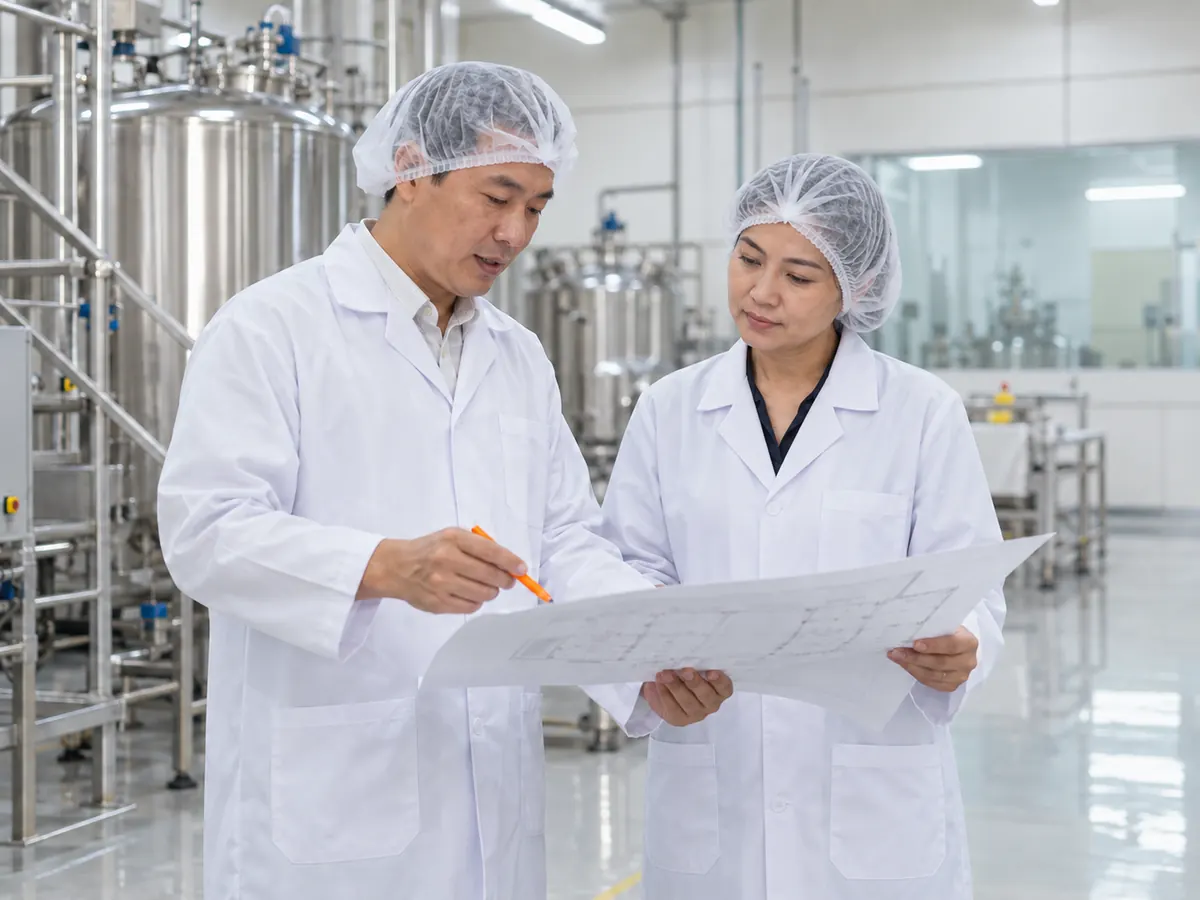
Before you build or renovate a production site in Thailand, find out whether your product needs a food production license, a cosmetic notification or a herbal product manufacturing license, because each route sets different site requirements. This guide covers the food factory license in Thailand, the requirements for cosmetic manufacturing sites, how to lay out a food factory to Thai FDA criteria based on Good Manufacturing Practice (GMP), and how to prepare for a site inspection, so the design is right the first time.
Setting up a food, cosmetic or herbal factory in Thailand: which law applies
The first question in setting up a factory is not the size of the building. It is which law covers the products you will make, because the Thai Food and Drug Administration (Thai FDA) uses a different authorization route for each product group.
| Product group | What you need before producing | Main site requirements |
|---|---|---|
| Food and dietary supplements | A food production license, for premises that count as a factory (Food Act B.E. 2522 (1979), Section 14) | Ministry of Public Health Notification No. 420 B.E. 2563 (2020) on production methods, production equipment and food storage |
| Cosmetics | A notification receipt for each cosmetic product (Cosmetic Act B.E. 2558 (2015), Section 14) | Ministry of Public Health Notification on criteria, methods and conditions for producing or importing cosmetics B.E. 2561 (2018) |
| Herbal products | A herbal product manufacturing license, for products specified by the Minister | Ministry of Public Health Notification on criteria, methods and conditions for producing herbal products B.E. 2564 (2021) and its amendments |
All three build on the same principle, Good Manufacturing Practice (GMP): preventing contamination, controlling the process and keeping records that allow tracing back. The details and the level of strictness differ. If you plan to make more than one product group in the same space, the layout has to meet the criteria of every group at the same time.
A note on dates: Thai laws are dated in the Buddhist Era (B.E.), which runs 543 years ahead of the Western calendar, so B.E. 2563 is 2020.
Changing a layout after construction usually costs more than designing it correctly from the start. Have someone who understands the criteria review the plans before building begins.
Food factory license in Thailand: when you need one, and forms อ.1 to อ.5
Section 14 of the Food Act B.E. 2522 (1979) prohibits setting up a factory to produce food for sale without a license. In this Act, 'factory' means a factory under the factory law that is set up to produce food. Production premises that do not count as a factory receive a food production site number instead, and Notification No. 420 requires those premises to follow its criteria as well.
The forms are set by Ministerial Regulation No. 1 B.E. 2522 (1979). Thai speakers often search for them as
| Form | Used for |
|---|---|
| Application for a license to set up a factory producing food for sale | |
| The food production license issued by the licensing authority | |
| Application to renew the license | |
| Application for a replacement license | |
| Application to move the production site or the food storage site |
A food production license is valid until 31 December of the third year counting from the year of issue. To renew it, you must apply before it expires (Food Act B.E. 2522, Section 18). The team can check whether your premises count as a factory before you start preparing documents.
Food production site application: documents and drawings to prepare
Ministerial Regulation No. 1 (1979) lists the evidence to attach to an application to set up a food factory. The list shows what reviewers want to see. The main items are:
- A list of production machinery and equipment, with machine power ratings.
- A map showing the factory location and nearby buildings.
- Scaled drawings of the buildings within the factory grounds, including front and side elevations, floor plans and sections.
- The division of rooms or areas for raw materials, production, machinery installation, packing and product storage, with floors and walls made of easy-to-clean materials and production floors sloping towards the drains.
- The drainage pipes or channels and the wastewater discharge method, with calculations and flow direction.
Besides the documents listed in the regulation, in practice you usually also need proof of the right to use the premises, company documents and information on the products to be made, complete as the Thai FDA requires at the time of filing.
A common cause of delay is drawings that do not match the actual site, for example a room added or machinery moved after the drawings were submitted. When the inspector finds a mismatch, the drawings must be revised and a new inspection booked. Fix the layout before you submit.
If you move the production site or food storage site after approval, you must apply on form
Designing a food factory to GMP under Notification No. 420
 AI-generated image
Ministry of Public Health Notification No. 420 B.E. 2563 (2020) has two parts. Part 1 sets the basic requirements for all food production sites, in five chapters: location and production buildings; equipment and machinery; production process control; sanitation; and personal hygiene. Part 2 adds specific requirements for three high-risk groups: filtered drinking water and ice, pasteurized milk, and low-acid and acidified foods in hermetically sealed containers. Producers in these three groups must also have a production supervisor trained on a course recognized by the Thai FDA.
Requirements that directly shape the building design include:
- A location away from sources of contamination, such as waste, animal pens, dust and smoke, or standing water. If this cannot be avoided, protective measures are needed.
- Durable, smooth, easy-to-clean floors, walls and ceilings, with floors sloping towards the drains.
- Production areas separated from living quarters, from non-food production and from eating areas.
- Areas organized to follow the production flow so that cross-contamination does not occur, with a room or other measures to manage the packing area.
- Ventilation that controls the direction of airflow, so air from dirty areas does not flow into clean areas, plus adequate lighting.
- Tables or surfaces in direct contact with food at least 60 centimeters above the floor, or at a height that prevents contamination from the floor.
One principle works for every factory: route raw materials, people, air, water and waste from dirty areas to clean areas in one direction, without doubling back. Where these routes cross is often where inspectors raise findings.
Cosmetic manufacturing sites: requirements under the 2018 notification
Anyone producing cosmetics for sale, or contract manufacturing cosmetics, must meet the requirements on premises, equipment, production methods and storage in Annex A of the Ministry of Public Health Notification on criteria, methods and conditions for producing or importing cosmetics B.E. 2561 (2018). The main points on premises and systems are:
- A sign made of durable material showing the words 'cosmetic production site'
(สถาน ที่ผลิตเครื่อง สำอาง), clearly visible from outside. - At least two separate rooms: one for production and filling, and one for storing raw materials, packaging materials and products.
- Production-related rooms separated from living quarters, and not used as a walkway to other areas.
- Adequate lighting and ventilation, with protection against animals and insects.
- Hygienic toilets that do not open directly into the production room, plus fire extinguishers and a first aid kit.
- Water used in production that meets at least the standard for drinking water in sealed containers.
- Staff who are trained, with training records kept, and who have health checks at least once a year.
On documentation, you need a master formula that matches the notified formula, a production record for every batch from weighing raw materials to filling, quality control records, retained samples of finished products, and procedures for handling complaints, reporting adverse reactions and recalling products.
Contract manufacturers are covered by these requirements too. If your brand uses a contract manufacturer, check that the factory is ready for inspection and that the documents for your formula are complete.
Cosmetic production in Thailand: notify first, then prepare for inspection
For cosmetics, getting permission to produce legally means notification. In Thailand, cosmetics are 'notified' rather than registered. Section 14 of the Cosmetic Act B.E. 2558 (2015) requires anyone who produces cosmetics for sale, imports them for sale or contract manufactures them to notify the details of each cosmetic first, and production may begin only after the notification receipt has been issued. The notifier must also follow the production criteria set by the Minister, which are the site requirements described in the previous section.
A notification receipt is valid for three years from the date of issue (Cosmetic Act B.E. 2558, Section 15), so it is worth setting up a system to track the expiry of each formula from the start.
The Thai FDA publishes a revised manual for site inspections under the 2018 notification. Businesses can use it to check their own readiness item by item, covering buildings, personnel, hygiene, production, quality control and documents (Thai FDA site inspection manual, 2nd revision, 2025). A practical sequence:
- Assess the actual site against the requirements and list what needs fixing.
- Adjust the layout so the required rooms are separate and the flow of materials does not double back.
- Prepare the master formula, production record forms, cleaning record forms and the complaint handling procedure.
- Train staff and keep records, arrange health checks, and test the quality of the water used in production.
- Run an internal audit against the manual before the real inspection.
Herbal product manufacturing licenses compared with food licenses
Herbal products fall under the Herbal Products Act B.E. 2562 (2019). Anyone producing herbal products specified by the Minister must apply for a license, with supporting evidence, under the Ministerial Regulation on applying for and issuing licenses to produce, import or sell herbal products B.E. 2563 (2020). The key evidence on premises includes:
- A map with the location and coordinates of the production and storage sites, including nearby buildings.
- Plans of the buildings within the site.
- Proof of ownership or right of possession, or a letter of consent from the owner of the premises.
- Details of the systems for wastewater, sewage and waste disposal, air control, and the water used in production.
- Documents on the qualifications of the applicant and of the person responsible for operations.
The same regulation allows premises of the same kind as those used to produce medical devices, cosmetics, drugs or food to be used as a herbal production site where necessary. This helps producers who already have premises, but you still need to check that the site fully meets the herbal product criteria.
The herbal production criteria of 2021 are tiered by the risk of the production process. Sterile products, or products with modified release of the active substance, for example, count as high risk and follow criteria adapted from the rules for drug manufacturing. This notification has since been amended, so check the latest version before you design.
If you produce both herbal products and herbal raw materials at the same site, the notification requires you to follow the criteria for the higher-risk process.
Preparing for a Thai FDA site inspection: what to have ready
 AI-generated image
A site inspection looks at more than the building. It checks that the systems actually work and that there is evidence to show it. Notification No. 420 lists several things food producers must have, which make a good preparation list:
- Calibration of weighing and measuring equipment at least once a year.
- Analysis results, at least once a year, for water and ice used as ingredients or in contact with ready-to-eat food, and for the final product, from a government laboratory or an accredited laboratory.
- Traceability data, such as production batches and the sources of raw materials, packaging and products.
- Records of product types and production volumes, distribution data, and a recall procedure.
- Records and reports kept for at least 1 year after the end of the shelf life shown on the label.
- An Internal Quality Audit (IQA) at least once a year.
For cosmetics, inspectors often ask to see the master formula, the production record for the latest batch, cleaning records, training records, health check results and retained samples. In practice, the documents often exist, but the records are not kept continuously, or the data in the records does not match the notified formula.
A very helpful step is a mock inspection before the real one. Ask someone who does not work in that area to walk through the checklist, then fix the gaps first. The result of the real inspection is the Thai FDA's decision, and nobody can make it on their behalf, but good preparation can reduce the number of corrections needed.
If you plan to seek additional certification for trade or export, such as an international food safety system, allow for it in the layout from the start. See the certification service page for details.
Talk to our team about factory setup and site licensing
TIBD Co., Ltd. provides consulting from the first assessment of the site and production layout, through designing the layout to Good Manufacturing Practice and preparing license documents for food, cosmetic and herbal production sites, to getting ready for the site inspection.
To start, send details of the products you plan to make, the floor area, and any draft plans or photos of the site. The team will contact you to understand the work, then propose a scope of work and a quotation, and start once you agree. Timing depends on the condition of the site and the product type; the team will state it in the quotation.
Meanwhile, you can read the original notifications with the Thai FDA notification search on this website. Contact the team through the web form on the 'Talk to our team' page, on LINE at @tibdglobal, or by email at info@tibdglobal.com. The team works in both Thai and English.
Frequently asked questions
What are forms อ.1 and อ.2 for a food factory?
Under Ministerial Regulation No. 1 B.E. 2522 (1979), issued under the Food Act, form
How long is a food production license in Thailand valid?
Section 18 of the Food Act B.E. 2522 (1979) makes it valid until 31 December of the third year counting from the year of issue. You must apply to renew it before it expires.
Does a cosmetic factory need a factory license from the Thai FDA?
Cosmetic law uses a notification system instead. Each cosmetic must be notified before production, and the production site must meet the Ministry of Public Health Notification on criteria, methods and conditions for producing or importing cosmetics B.E. 2561 (2018).
How many rooms does a cosmetic production site need?
The 2018 notification requires at least two separate rooms: one for production and filling, and one for storing raw materials, packaging materials and products. Production rooms must also be separate from living quarters.
Which food factories does Notification No. 420 apply to?
It applies to food production sites for sale in general, except in certain cases the notification specifies. The basic requirements have five chapters, with extra specific requirements for filtered drinking water and ice, pasteurized milk, and low-acid and acidified foods in hermetically sealed containers.
References
- Thai Food and Drug Administration. (1979). [Food Act B.E. 2522 (1979)] (in Thai). Open document ↗
- Thai Food and Drug Administration. (1979). [Ministerial Regulation No. 1 B.E. 2522 (1979) issued under the Food Act B.E. 2522 (1979) on applying for a license to set up a factory producing food for sale] (in Thai). Open document ↗
- Thai Food and Drug Administration. (2020). [Notification of the Ministry of Public Health No. 420 B.E. 2563 issued under the Food Act B.E. 2522 (1979) on production methods, production equipment and food storage] (in Thai). Open document ↗
- Thai Food and Drug Administration. (2015). [Cosmetic Act B.E. 2558 (2015)] (in Thai). Open document ↗
- Thai Food and Drug Administration. (2018). [Notification of the Ministry of Public Health on criteria, methods and conditions for producing or importing cosmetics B.E. 2561, dated 4 May 2018] (in Thai). Open document ↗
- Thai Food and Drug Administration. (2025). [Manual on site inspection under the Ministry of Public Health Notification on criteria, methods and conditions for producing or importing cosmetics B.E. 2561, 2nd revision, updated 16 October 2025] (in Thai). Open document ↗
- Thai Food and Drug Administration. (2020). [Ministerial Regulation on applying for and issuing licenses to produce, import or sell herbal products B.E. 2563] (in Thai). Open document ↗
- Thai Food and Drug Administration. (2021). [Notification of the Ministry of Public Health on criteria, methods and conditions for producing herbal products under the Herbal Products Act B.E. 2562 (2019), B.E. 2564] (in Thai). Open document ↗